Help your player know exactly what to work on between practices.
The Sporting Blue Valley Season Journal is a 100+ page book built to last the whole season. Five minutes after each practice, your player sketches the drill that stood out and rates themselves from 1 to 5 on skills like control, decision-making, and teamwork. By May, they can see exactly how far they've come.
On the field
They know exactly what to work on next, with their own goals and a progress check every 4 matches.
They understand the game better by sketching drills and recording their position after every match.
They get more out of every talk with their coach, because they can describe their own game.
Off the field
They learn to set a goal, stick with it, and check their own progress.
They practice handling pressure, mistakes, and nerves, with reflection questions every week.
They build real confidence by seeing a season of progress in their own handwriting.
First batch: order before Nov 1
00days00hrs00min00sec
Every book is printed to order and delivered to your door.
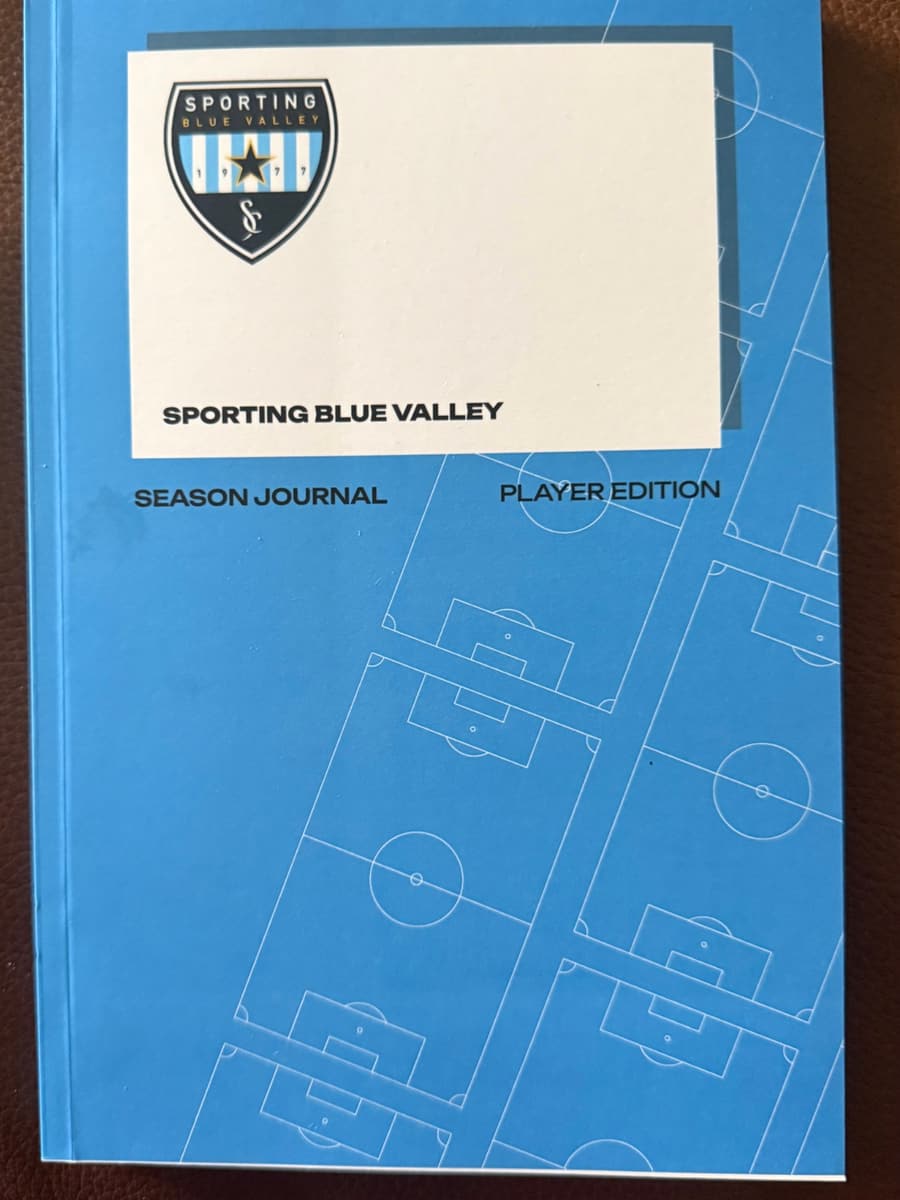
The real Player's Book. Softcover, with the SBV crest on the front and color-coded tabs inside.
100+ pagesBuilt to last the ten-month season
5 minutesAfter each practice or match
2 editionsOne for players, one for coaches
Printed to orderDelivered to your door
There Are Two Journal Versions to Pick From
Player Edition
The Player's Book
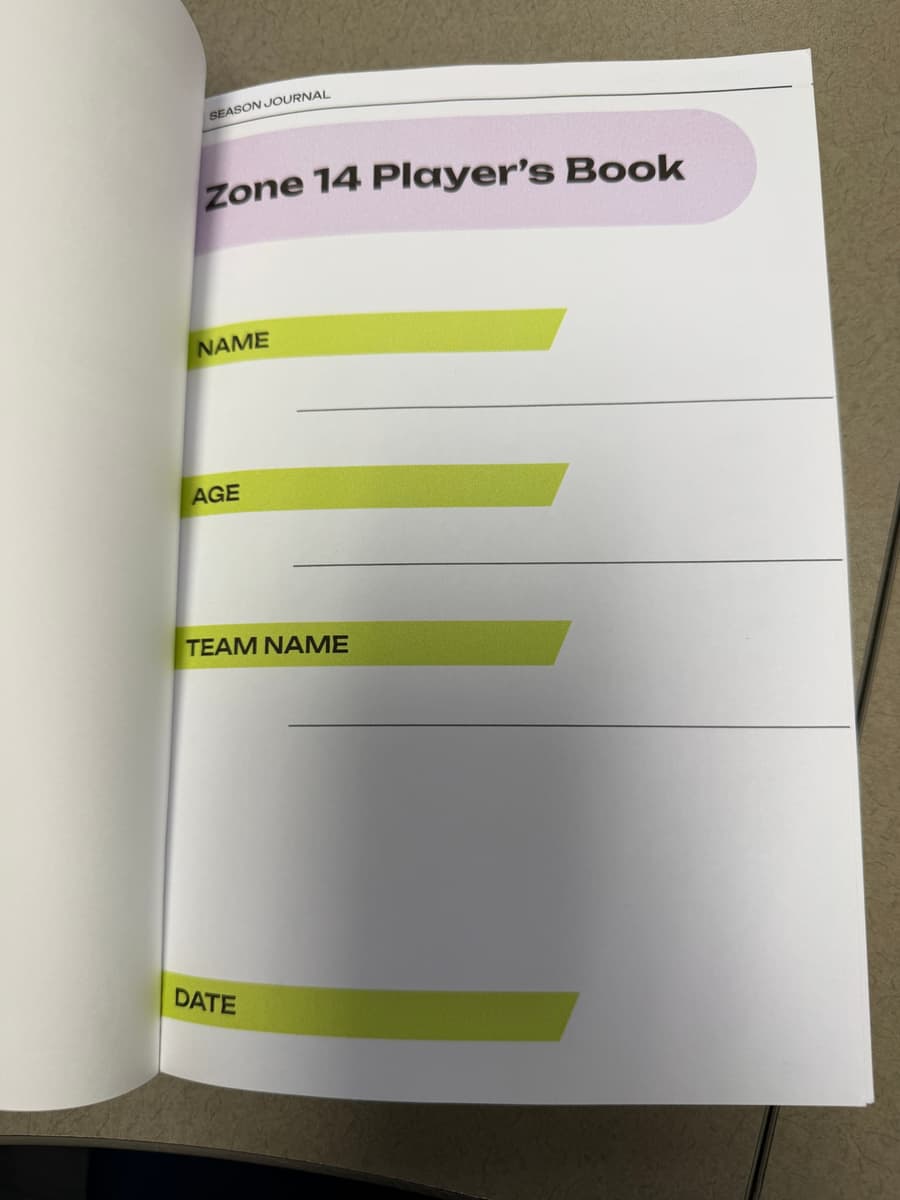
A full ten-month season in one softcover book, with color-coded tabs and a first page for your player's name, age, and team. It's built to survive a season in a soccer bag.
Order before Sunday, Nov 1 to get yours in the first batch.
How You Know the Journal Actually Works
The questions are really, really intentional... They get the players to think in a real soccer context. I think it's a really outstanding product.
Gary CurneenModern Soccer Coach Podcast
The journal helps players slow down and think about their effort and progress. It's been incredible to watch kids get proud of small improvements and celebrate them.
Club coachSporting Blue Valley
This journal goes far beyond soccer skills. It's helping our child learn how to reflect, recognize strengths, and work through challenges in a really positive way.
Club parentSporting Blue Valley
The SBV Scholarship Fund
And Every Book Helps a Kid Play
All proceeds from this go directly to SBV platform team scholarships.
The Sporting Blue Valley Scholarship Fund covers what the club can't cover on its own for players whose families need help: things like uniforms, team fees, and league and tournament fees.
78players covered by the fund last season
51of them on Premier teams
Since 1977helping thousands of players get the gift of soccer
That's almost 50 years of kids getting the gift of soccer, and these books are how we keep it going.
Here's What to Do Next
1
Tap the green button for your book. Player's Book or Coach's Planner, $25 each. Buying more than one? Change the quantity at checkout.
2
Enter the player's name, team, and your address, then pay on Stripe's secure checkout. Coaches enter their own name and team.
3
Your book is printed and delivered to your door.Orders placed before Sunday, Nov 1 go in the first batch.
4
Open it before the next session and fill out one page. Just one. That's how it starts.
First batch: order before Nov 1
00days00hrs00min00sec
Every book is printed to order and delivered to your door.
Every book is printed to order and delivered to your door.
Answers to common questions, the whole story behind the journal, and every page of both books.
Your Questions
Which one do I need?
If you play, the Player's Book. If you coach, the Coach's Planner. If you coach and have a player in the club, get both. They're designed to work together, and that's when they're at their best. Both are $25.
My player is young. Is this too advanced?
No. Honestly, the younger players benefit most, because you're building the habit before they've spent six years not having it.
A younger player will get more out of it with a parent next to them for the first few weeks. Five minutes at the kitchen table: read the question out loud, let them answer, and let them write it in their own words, even if the handwriting is rough and the spelling is worse. It's their book, not yours.
After a month, most kids do it on their own. U13 and up will run with it from day one.
My kid won't use it. It'll live at the bottom of the bag with their shin guards.
Fair. That's the real risk, and we're not going to pretend otherwise.
Two things stack the deck. First, it's theirs: their name, age, and team go on the first page, and the introduction tells them they don't need to share it with anyone. Kids treat things that are theirs differently.
Second, the bar is low. Some weeks they'll write a paragraph. Some weeks they'll circle a few numbers and close it. Both count. The only wrong way to use it is to never open it. Five minutes, most sessions.
When do I get it?
Every book is printed to order and delivered to your door. Order before Sunday, Nov 1 and yours is in the first batch.
Why is a 100+ page book only $25?
Because it's a fundraiser. All proceeds go directly to SBV platform team scholarships, and we'd rather put this book in as many players' hands as possible.
What if it arrives damaged?
Zone 14 will reprint it for you. No forms, no arguing. Email ghughes@sportingbv.org and we'll take care of it.
Because every book is printed to order, we can't refund a correctly printed book. But if we got it wrong on our end, we fix it on our end.
Can I order more than one?
Please do: one for your player and one for a teammate. Just change the quantity at checkout.
I don't have a player in the club. Can I still order?
Yes. Grandparents, alumni families, former players, and anyone in the metro who wants to help a kid play are welcome. Type DONATION as the player's name when you order. It's the same SBV book.
Their name, age, and team go on the first page. It's their book.
You could hand a kid a spiral notebook and tell them to write about practice.
They'd write for two days and quit. Every one of us knows this, because every one of us was that kid.
Zone 14 built these journals with youth coaches, using a method they call Reflective Journaling — the same idea sports psychologists have used with elite athletes for decades, scaled down to something a ten-year-old can do in five minutes without an adult standing over them.
Your player is never staring at a blank page wondering what they're supposed to say. They're answering a specific question about a specific session. What stood out today? Where did you struggle? What will you do differently Thursday?
Specific questions produce specific thinking. Specific thinking produces actual improvement.
How it helps them progress on the field
After a few weeks, your player isn't guessing anymore. They know which parts of their game they've been rating low, and they walk into the next practice knowing what they're working on.
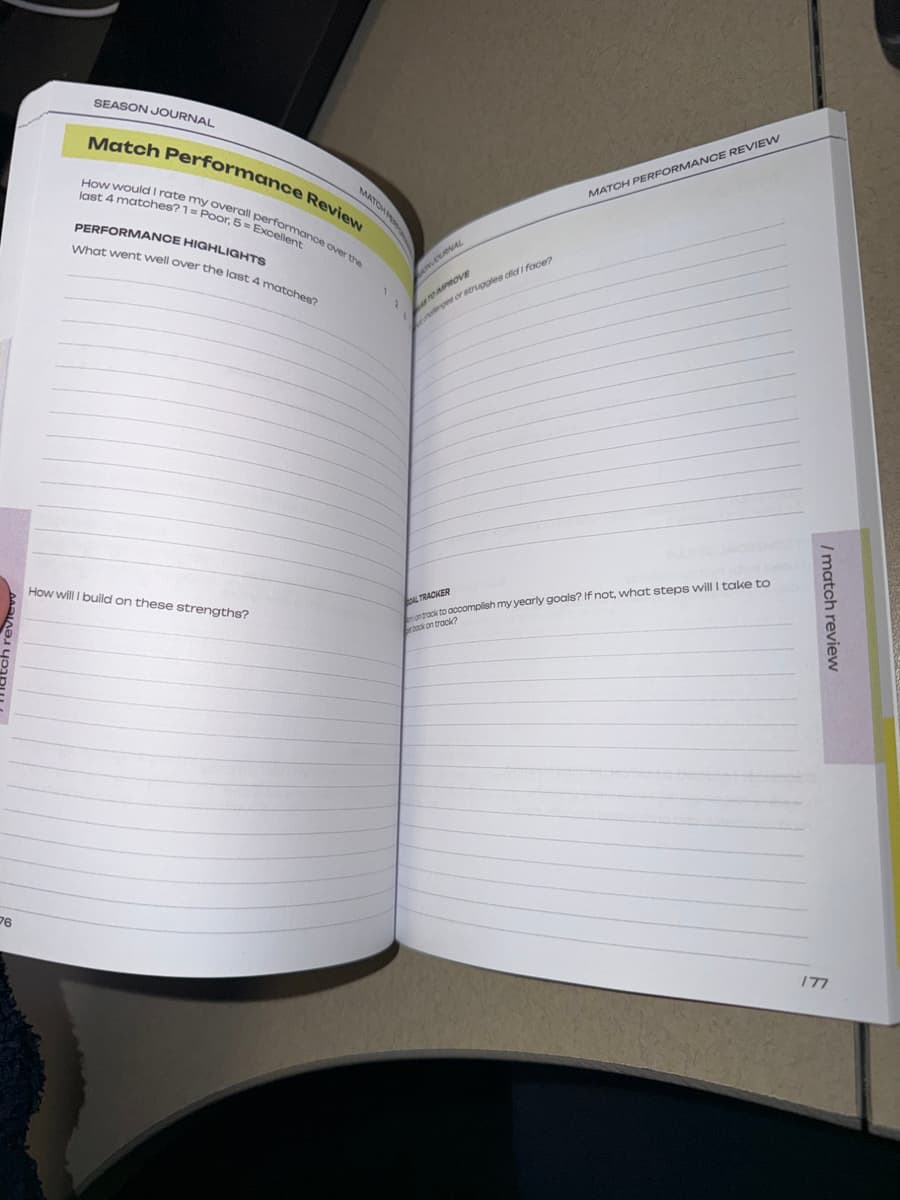
Sketching the drills and writing down their formation and position after every match gets them thinking about the whole field, not just the ball. And every 4 matches, the book stops and asks them: “Am I on track to accomplish my yearly goals? If not, what steps will I take to get back on track?”
And off the field
Every week, the journal also asks your player to reflect on their life outside the game. How did they handle the pressure? How did they talk to themselves after a mistake? What did they do that they're proud of?
As the book itself puts it: “A healthy mindset and strong mental well-being can elevate your performance on the field.”
Setting a goal and sticking with it. Bouncing back from a bad day. Being proud of real progress. None of that stays on the soccer field.
Five minutes after training:
1
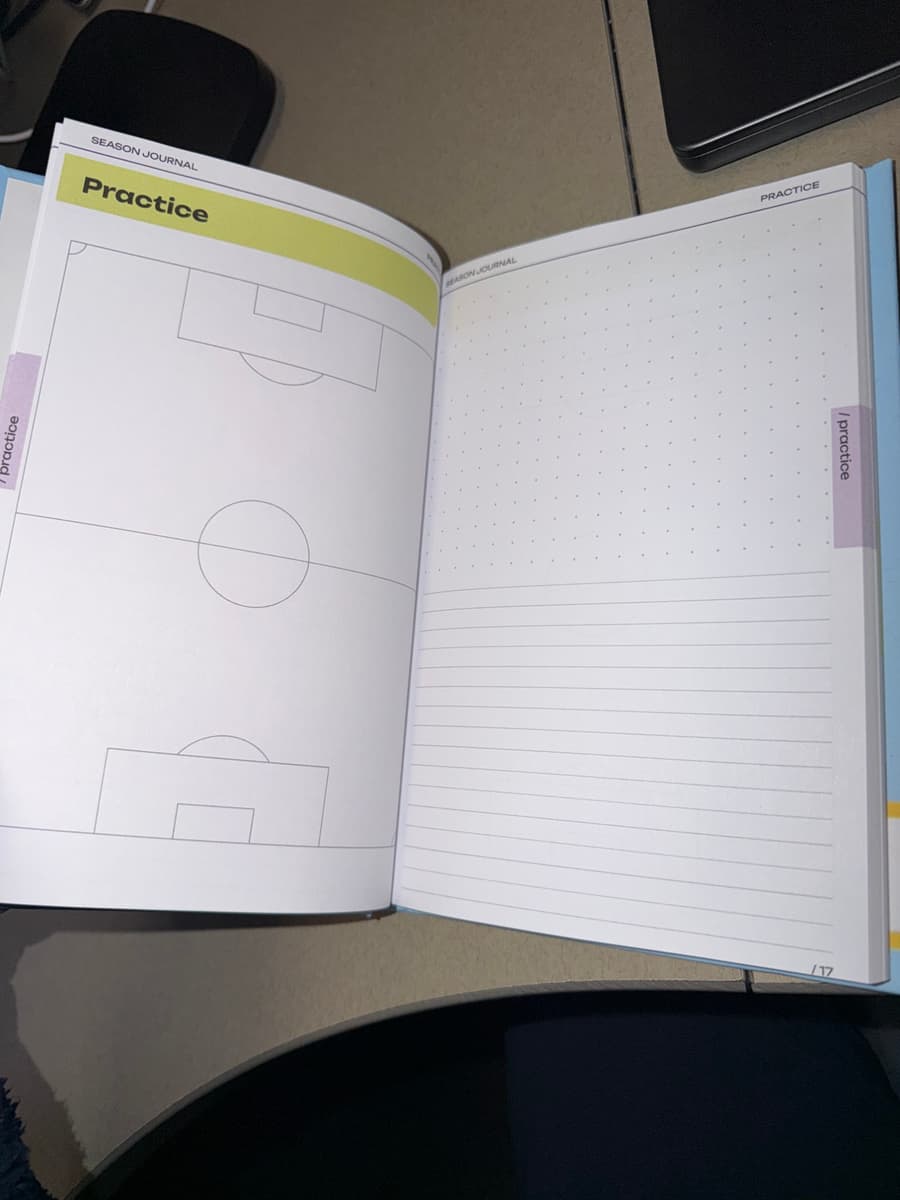
Sketch the drill that stood out on the field diagrams printed right on the page.
2
Write down the session focus and the part of the game it worked on.
3
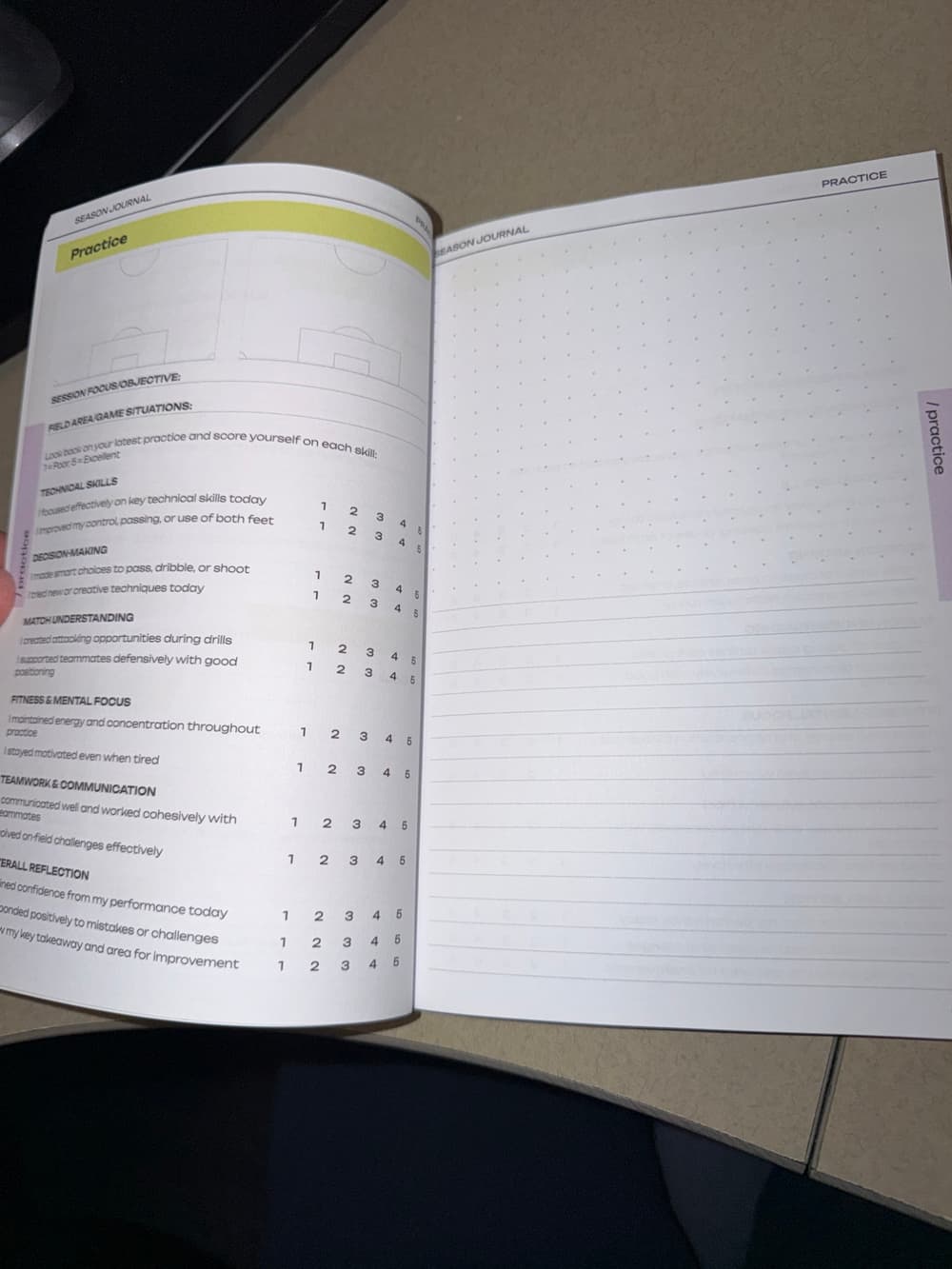
Rate themselves from 1 to 5 on 13 statements like “I made smart choices to pass, dribble, or shoot.” The facing page is open for notes.
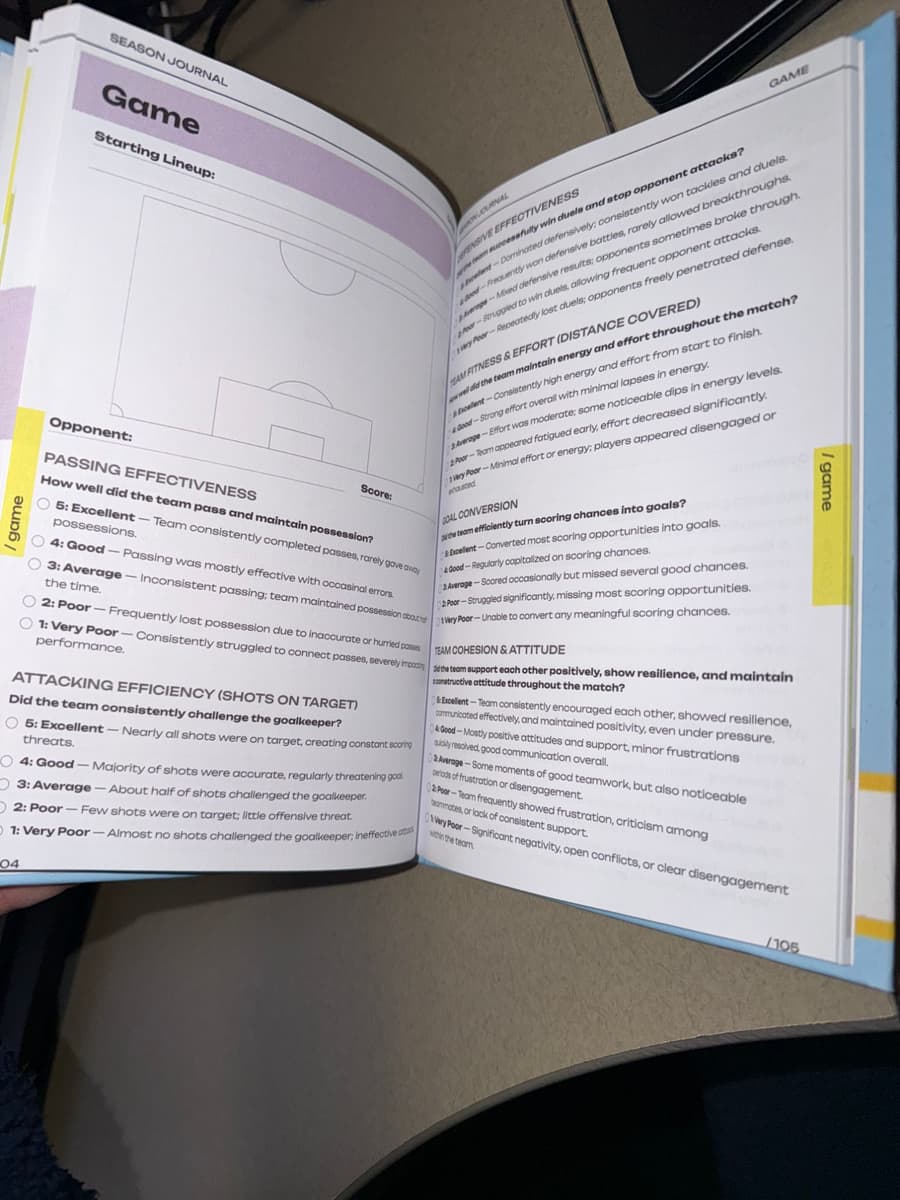
After matches, they record the formation and their position and rate 12 parts of their game. Every 4 matches, they check their progress toward their goals, and at mid-season and the end of the season, they look back at all of it.
Order before Sunday, Nov 1 to get yours in the first batch.
What It Does for Your Player, Their Coach, and You
For your player
The words to describe their own game
The journal gives a young player the language to describe their own performance: what they worked on, how they'd rate it, and what they'll do differently next time.
They set goals they can actually hit, and they have a private place to be honest about how it's going.
For their coach
Conversations that get specific
Our coaches noticed it first: players who journal have better conversations with their coaches. Instead of “how am I doing?”, which no coach can answer well in thirty seconds after training, your player shows up with “I've rated my decision-making a 2 for three weeks. What should I be looking for?”
For you
Five minutes, then they own it
Younger players do best with a parent next to them for the first few weeks: five minutes at the kitchen table. After a month, most kids do it on their own, and U13 and up will run with it from day one.
Player Edition
The Player's Book
Pages 4–7
Introduction and Goals for the Year
The “you don't have to show this to anyone” rule, printed right into the introduction — the reason players write honestly instead of writing what they think an adult wants to read (Page 5)
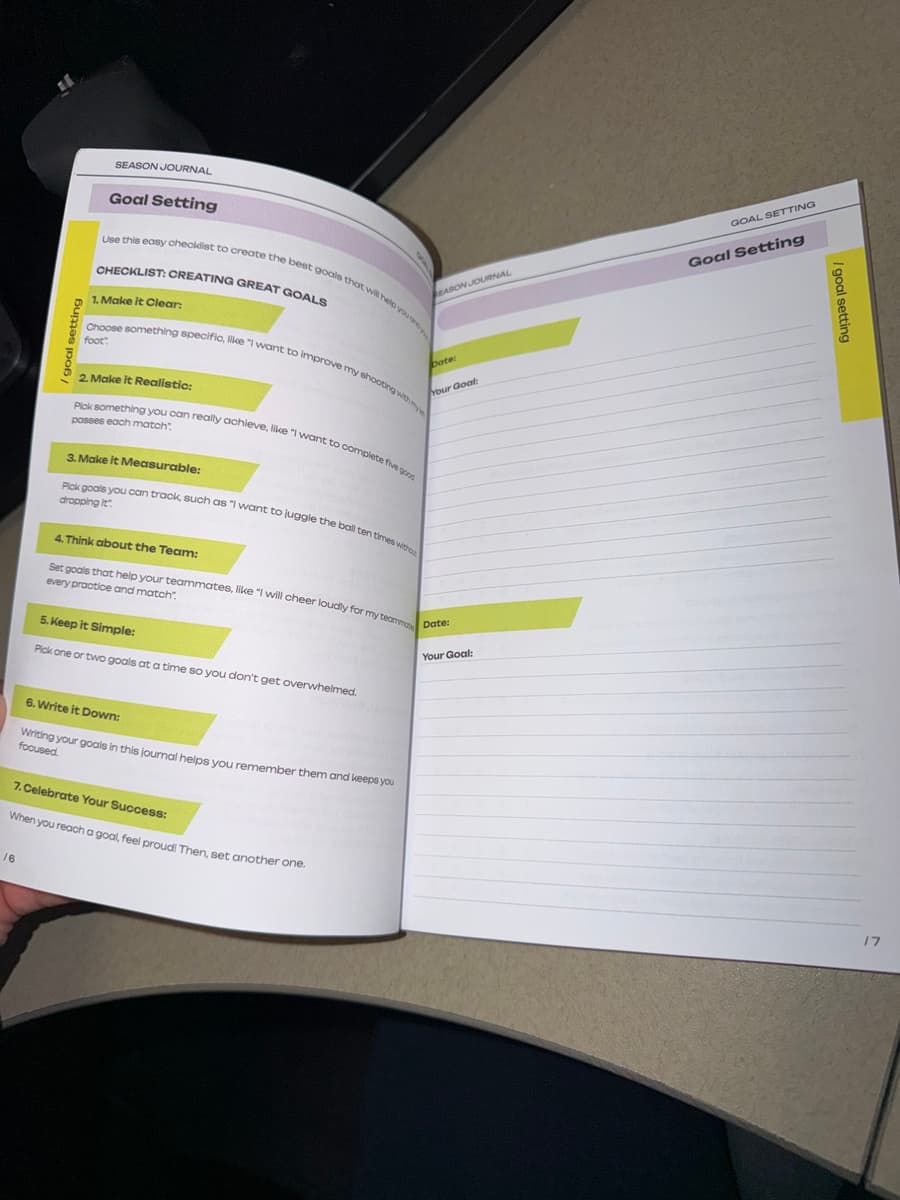
The 7-point checklist for building a goal a kid will actually hit — most youth soccer goals die on point #3, and your player will spot it in about ten seconds (Page 6)
Why “I want to get better this year” is the single worst goal in youth soccer — and the one-line rewrite that turns it into something trackable (Page 6)
The Goals for the Year spread your player will flip back to more than any other page in the book (Pages 6–7)
Goals for the Year: a 7-point checklist for goals a kid will actually hit, then room to write them down.
Pages 8–65
Practice Exercise & Notes
The half-field diagram on every practice page: what happens to a player's understanding when they have to draw the drill instead of just remembering it (Pages 8–35)
The 45-second self-rating that hands your player the exact vocabulary they need for their next conversation with their coach
28 practice reflections, one per session, so a full season of training accumulates instead of evaporating (Pages 8–35, 38–65)
A practice page from the Player's Book. Two field diagrams, the session focus, and 13 quick ratings, with a notes page beside it.
Pages 68–107
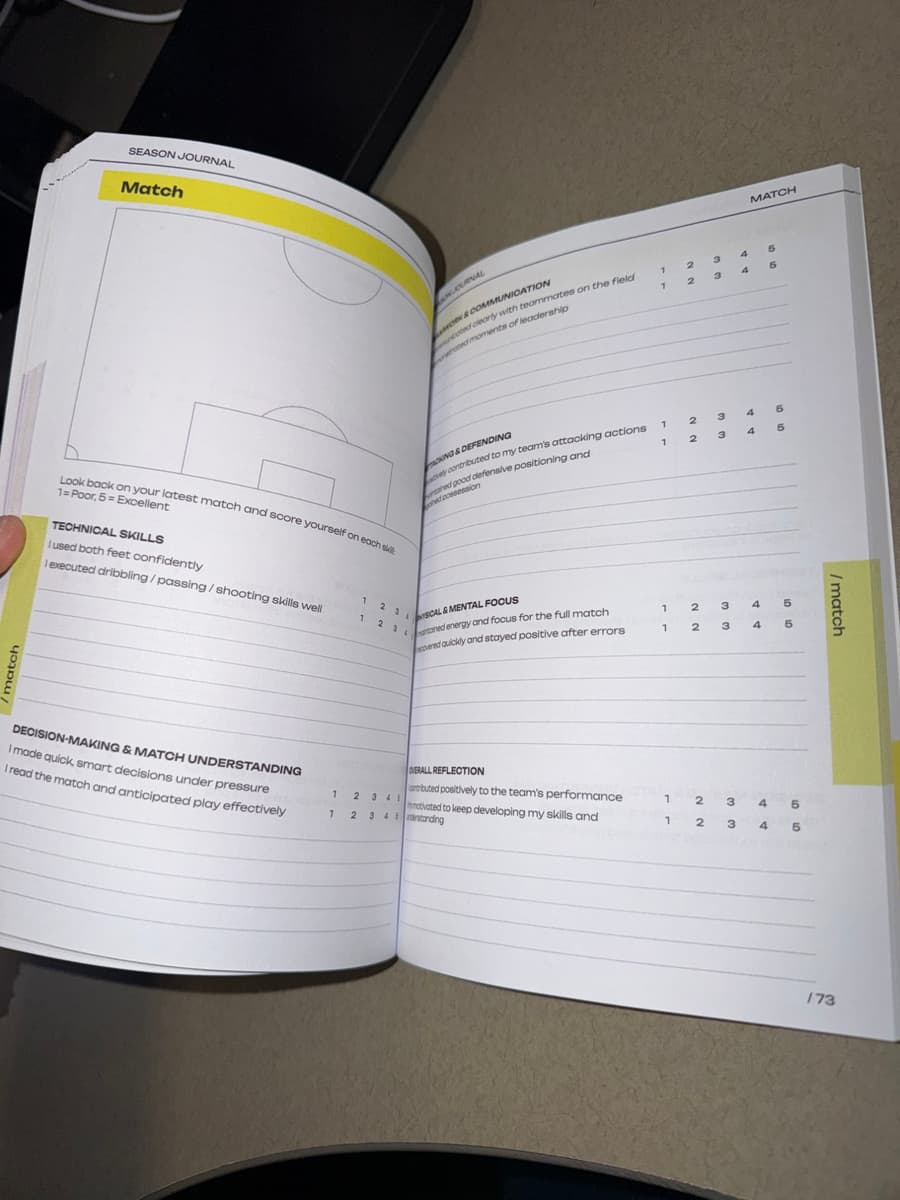
Match Exercise & Notes
Why recording your formation and position after every match builds tactical understanding faster than any film session a youth player will actually sit through (Pages 68–105)
16 match entries, each with its own notes page for expanding on what you saw while it's still fresh (Pages 68–105)
What to write after the worst game of the year — this page turns a bad night into the most useful entry in the whole book
After every match: a field diagram and 12 ratings, like “I made quick, smart decisions under pressure.”
Mid-season, every 4 matches, and end of season
The Reviews
The Mid-Season Review: a two-page checkpoint that catches a stalled season while there's still half a season left to fix it (Pages 36–37)
The Match Performance Review that fires every four matches — a built-in progress check most adults don't run on their own careers (Pages 76–77, 86–87, 96–97, 106–107)
The End-of-Season Review: three questions, no ratings, no scales. Just a player looking back at everything they put into the year (Pages 66–67)
Every 4 matches: what went well, what to improve, and “Am I on track to accomplish my yearly goals?”
Pages 108–143
Reflection
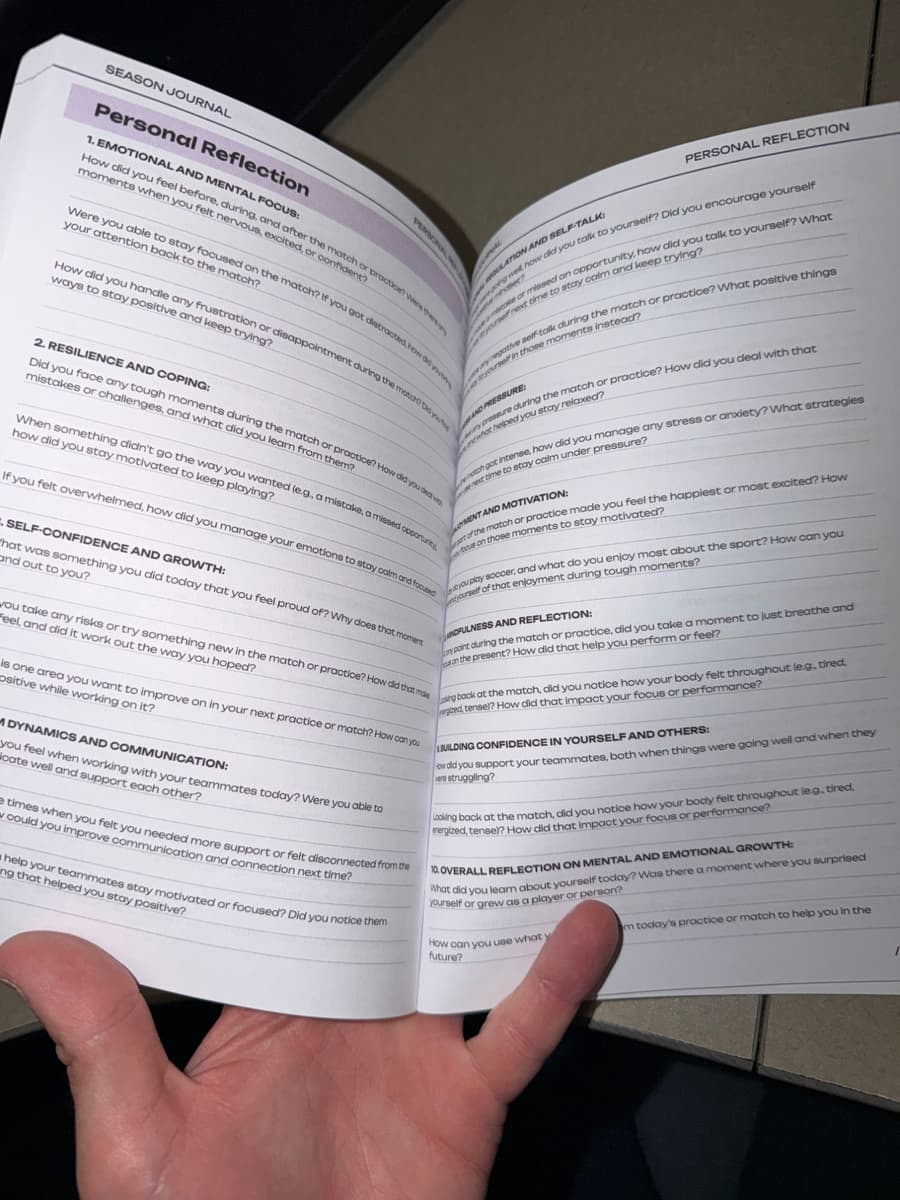
The Personal Section: 36 pages that go beyond soccer, into confidence, pressure, and life outside the game — the part club parents keep telling us is their favorite (Pages 108–143)
What to do with the book when the season ends — the instruction on the last page that turns this year's journal into next year's advantage
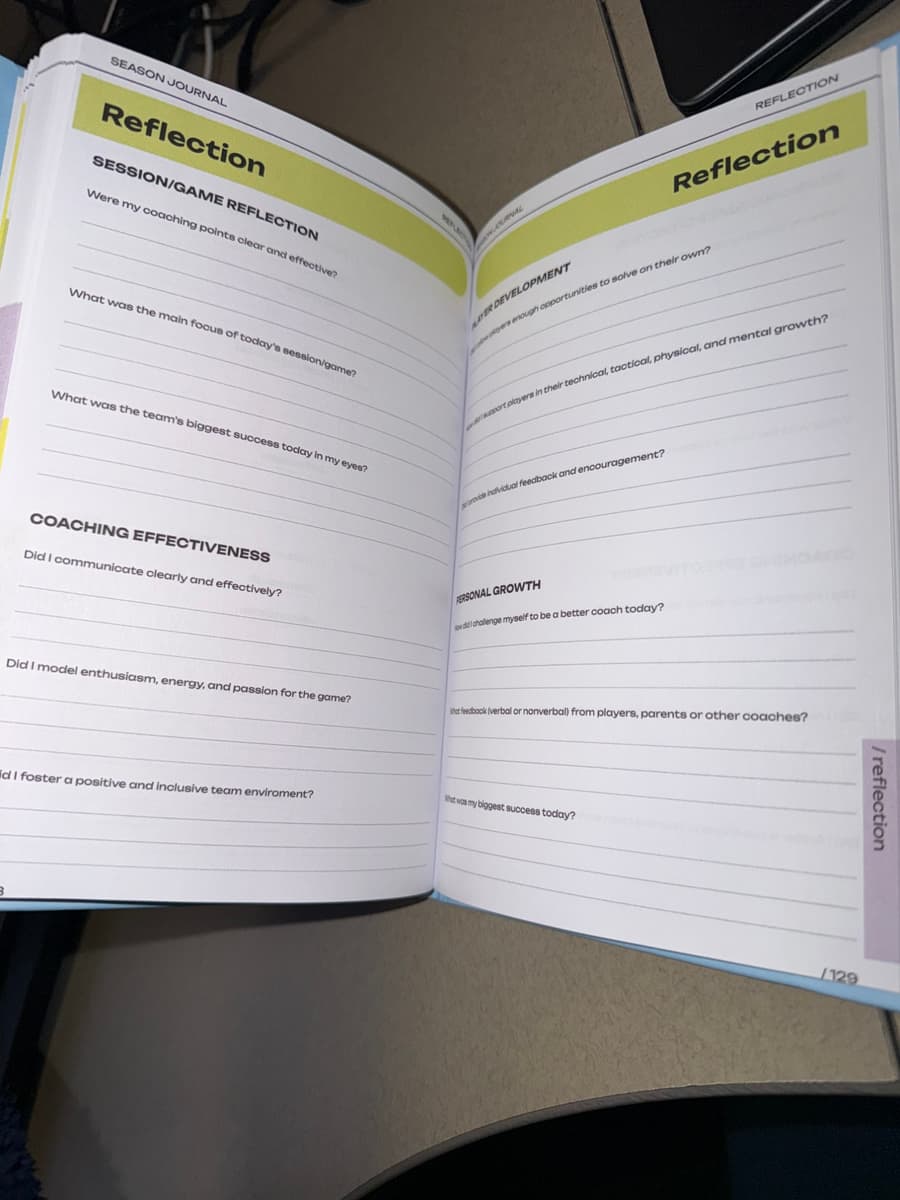
Personal reflection: questions on focus, resilience, confidence, pressure, and what they enjoy about the game.
What's inside, page by page
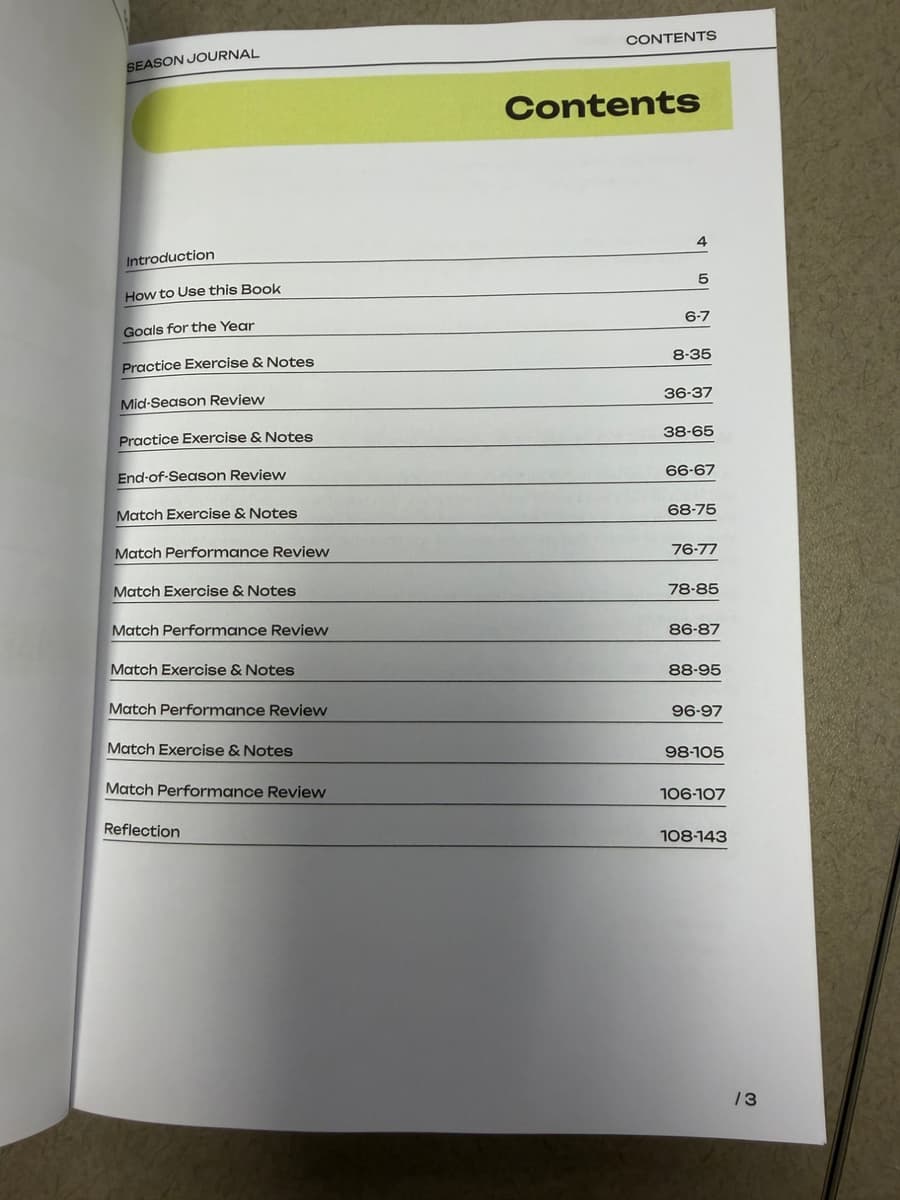
The contents page: practices, matches, reviews, and reflection, all mapped out.
What's inside, page by page
4–5
Introduction and How to Use This BookIncluding the promise that it's theirs: they don't need to share it with anyone.
6–7
Goals for the YearBuilt with a 7-point checklist for goals a kid will actually hit, and referred back to all season.
8–35
Practice Exercise & Notes14 practice entries: sketch the drill, write down the session focus, and rate 13 skills from 1 to 5, with a notes page beside each one.
36–37
Mid-Season ReviewA two-page checkpoint that catches a stalled season while there's still half a season left to fix it.
38–65
Practice Exercise & Notes14 more practice entries for the second half of the season.
66–67
End-of-Season ReviewA look back at everything they put into the year.
68–107
Match Exercise & Notes16 match entries: the formation, their position, and 12 ratings with room to write. After every 4 matches, a Match Performance Review checks progress toward their goals.
108–143
Reflection36 pages of personal reflection: focus, resilience, confidence, handling pressure, teamwork, and enjoying the game.
It's split into four sections, each with its own colored tab: Practice, Game, Tournament, and Personal Development.
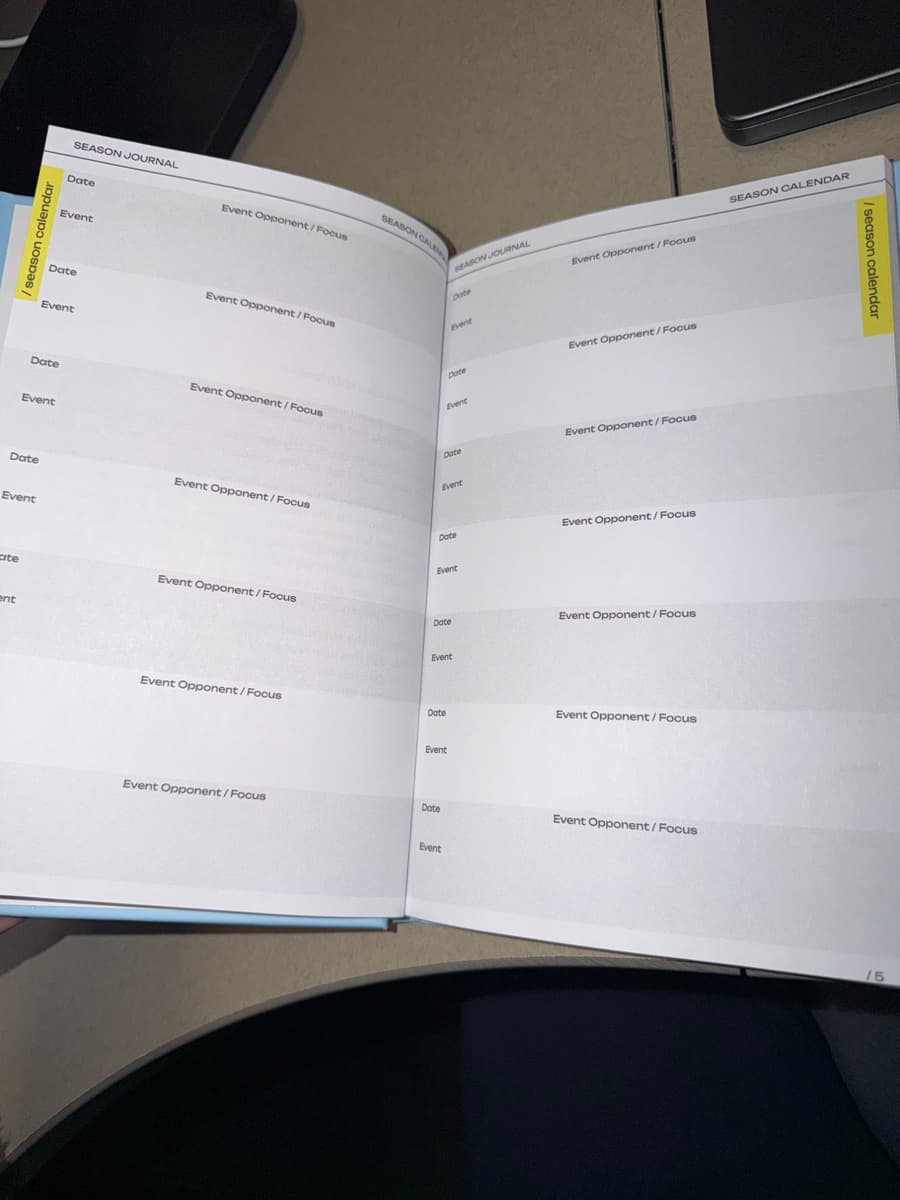
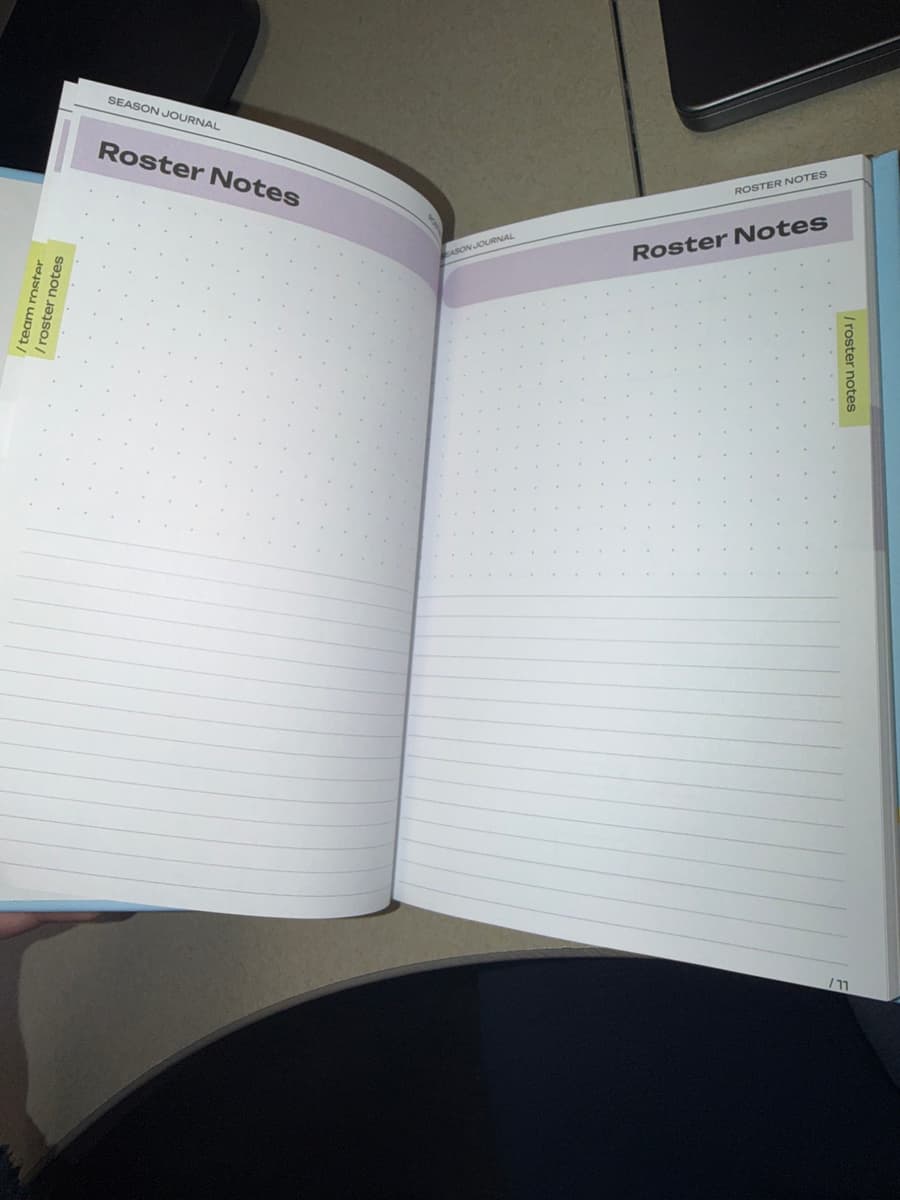
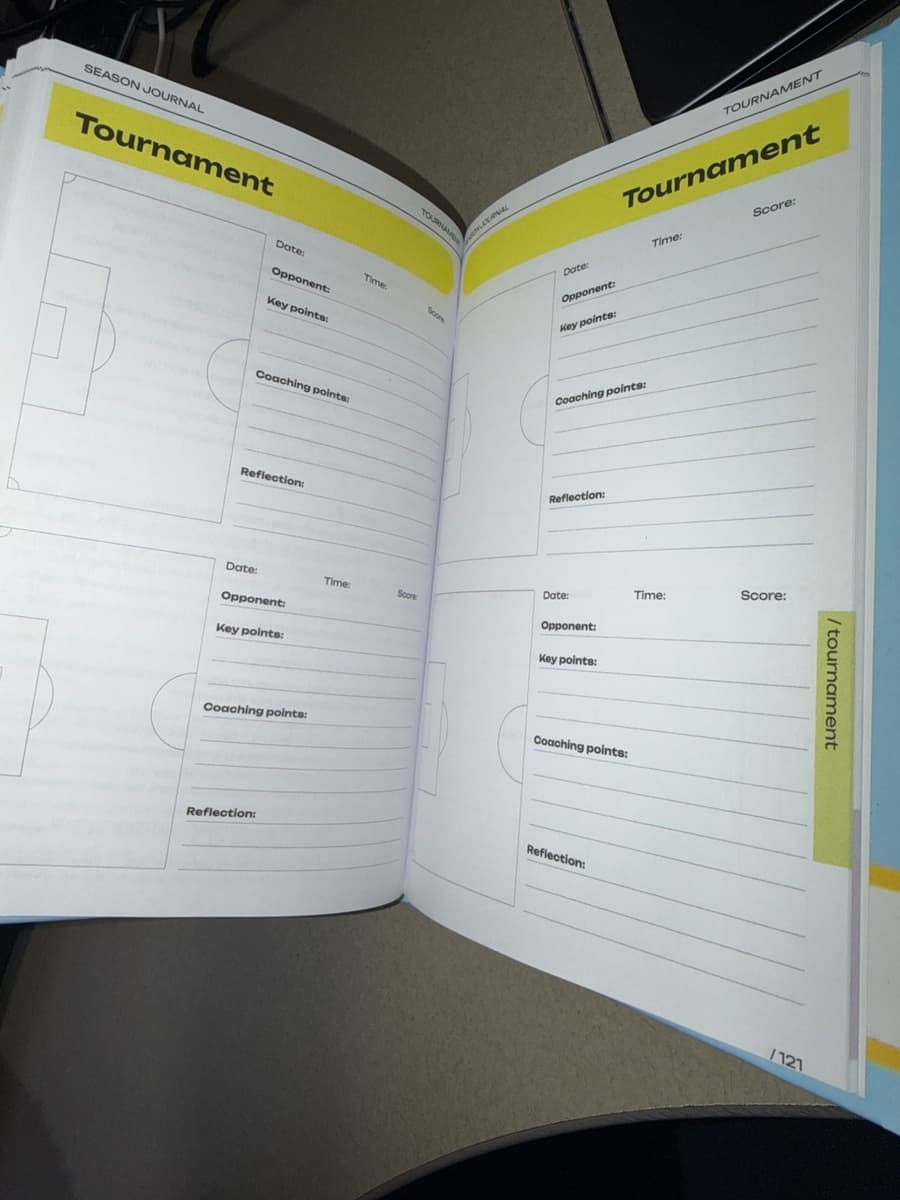
The season calendar: every date, event, opponent, and focus in one place.Roster notes for the things you'd otherwise try to keep in your head.Session plans: a full-field diagram to draw up each practice, plus room for notes.Game pages: the starting lineup, then the team graded 1 to 5 on passing, attacking, defending, effort, finishing, and attitude.Tournament pages for every game of the weekend: opponent, score, key points, coaching points, and a reflection.Coaching reflections: “Did I give players enough opportunities to solve on their own?”
46 session plan templates — a full season of training, planned on paper, connected to player outcomes instead of whatever you remembered on the drive over
28 season calendar slots so the entire year is mapped in one place before Week 1 instead of assembled week to week
24 roster slots with room for the notes you currently keep in your head and lose by October
8 match outlines for planning the game before it happens and evaluating it after
16 tournament outlines — because tournament weekends are where planning collapses and the planner is the only thing holding the shape
8 structured coaching reflections built on the same Reflective Journaling method as the Player's Book, so the thing you figured out in Week 4 is still available to you in Week 22
The reflection prompt that turns a bad result into your most valuable coaching document of the season
Why “we worked on it in training” is the most dangerous sentence in youth coaching — and the planner page that makes it impossible to say without evidence
A season-long record you can actually review — trends across months, not impressions from last Tuesday
Color-coded tabs so you can find the right page standing on a sideline with a ball coming at you
The whole point: it pairs with the Player's Book. When your players are rating their own game and you're grading the team's, your conversations with them stop being vague and start being specific.
At Sporting Blue Valley, we say we develop complete players: technically, tactically, and mentally. That last one is easy to put on a website and hard to actually do. This journal is us doing it.
It won't make your child a better athlete on its own. What it reliably does is give a young player the language to describe their own performance, and by May, a season in their own handwriting showing what changed since August.
The players who improve the most, at every level of this game, are the ones who think about their performances instead of just participating in them. We want every SBV player to have that habit. And we want every kid who wants to play here to be able to, whatever their family can afford.
Twenty-five dollars does both.
Thank you for reading, and thank you for being part of this club.
Shawn Forcellini Director, Sporting Blue Valley Soccer Club
P.S. The Player's Book and the Coach's Planner are $25 each: softcover with color-coded tabs, printed to order, delivered to your door, and built to survive a season in a soccer bag. All proceeds go directly to SBV platform team scholarships.